
His creative journey may not be the usual, but Amangpintor proves there’s no single way to pursue art
By Ryan Louis Mantilla
October 01, 2026
Some argue that artists are made and that skills can be acquired over time through extensive practice and experience. Others, however, are simply born with an innate ability to create. Amangpintor, whose real name is Elito Villaflor Circa, is definitely the latter.
Amangpintor’s path to becoming an artist didn’t start like the usual. Having grown up in an impoverished household in Pantabangan, Nueva Ecija, where survival was prioritized over anything else, he didn’t have the luxury to study art formally. But through his natural curiosity, it found a way into his life by accident—a beautiful one.
Amangpintor started his artistic journey by sketching on the walls and the cabinets of his home using only charcoal. Since he had no access to conventional coloring materials, his natural surroundings became his resource, specifically the flowers and fruits that left stains on his hands and clothes. Soon enough, his wounds also became a source of pigment after he had realized that blood could produce a bright, cherry-red shade.
Although his family’s finances made education seem out of reach for Amangpintor, World Vision, a global Christian humanitarian organization dedicated to helping underprivileged children, families, and communities, helped him through its Child Sponsorship Program. Beyond the educational support his World Vision sponsor provided, their words of encouragement and praise greatly motivated him. Amangpintor’s story is proof that sponsorship and support can nurture and develop a child’s talent, which can then flourish when given the opportunity and resources to grow.
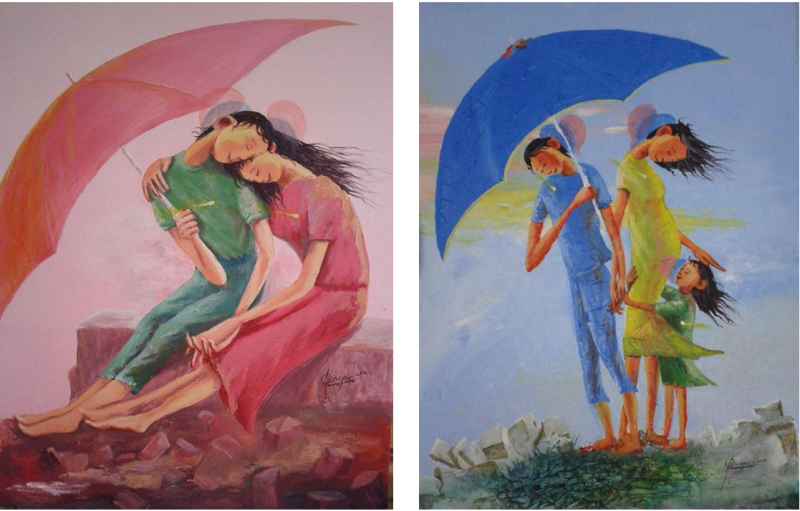
Considered an experimental artist—and a self-taught one, at that—the contemporary folk artist is known for his blood paintings. Now revered as the “Father Painter,” he is celebrated for his unorthodox approach to art, best known for his use of not only blood but also his own hair to create paintings that he exhibits both locally and internationally. In 2021, he and his family established the Amangpintor Art Museum in San Jose City, Nueva Ecija.
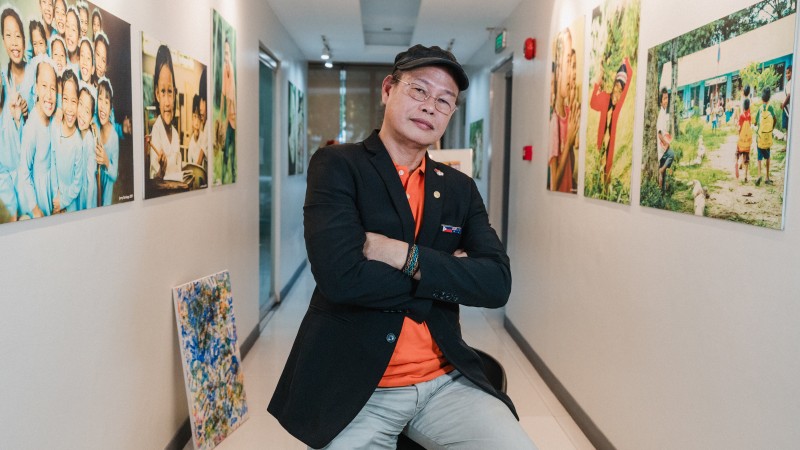
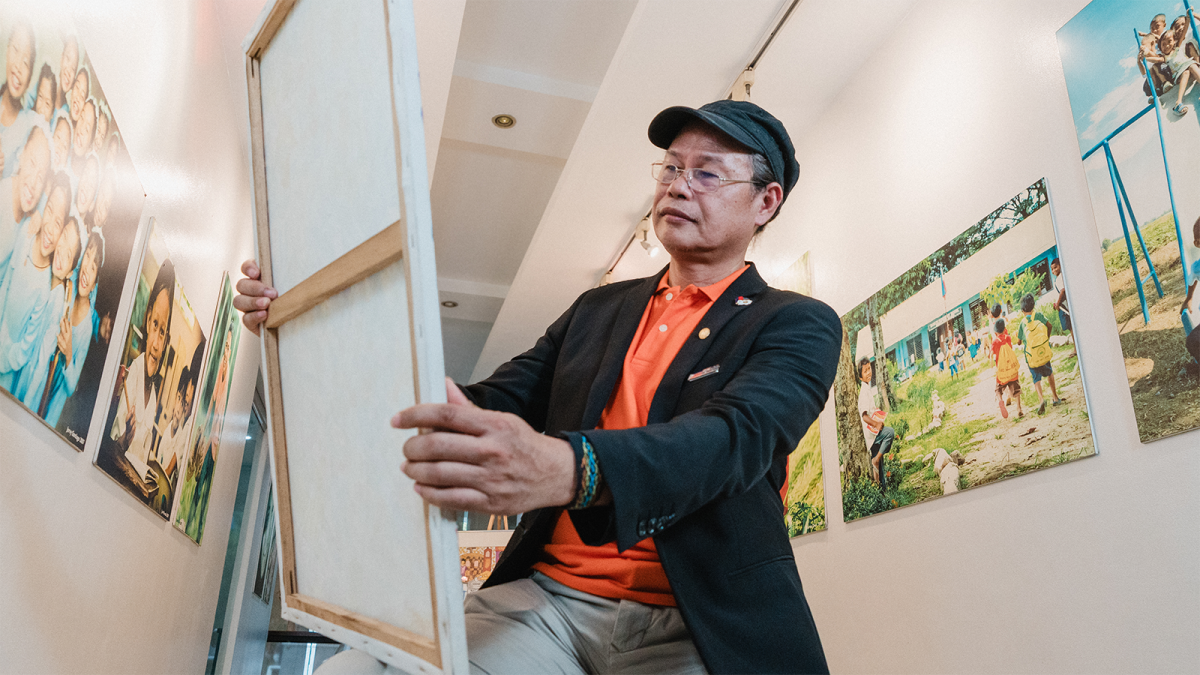
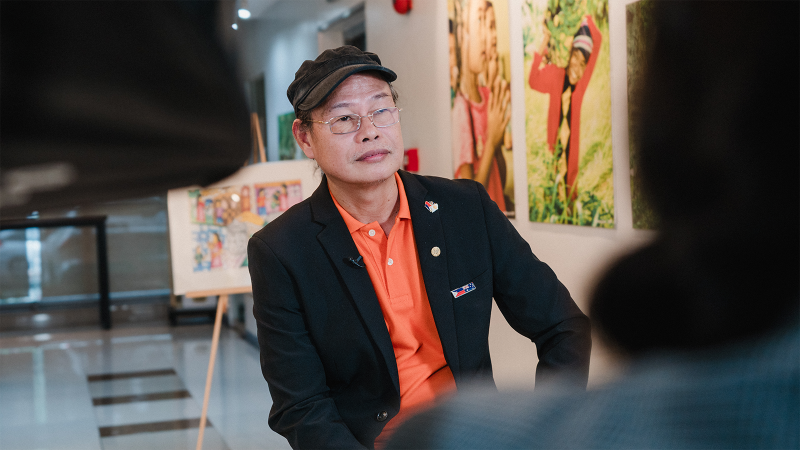
“Bilog ang mundo,” Amangpintor told CREATEPhilippines, a platform organized by the Center for International Trade Expositions and Missions (CITEM), during a meeting at the World Vision office in Quezon City. “Whatever one has done in the past, whether good or bad, they will certainly have to reckon with their actions later on.” Speaking from his personal belief in reincarnation, he reflected that he would want to be reunited with his artworks. “Since my paintings literally carry my blood, maybe if I get reincarnated and I get to see them, makakaramdam ako ng lukso ng dugo.”
CREATEPhilippines sat down with the artist weeks before his live painting showcase at the CREATEPhilippines x Manila International Performing Arts Market 2026 to learn more about his artistic journey, from how he developed his unconventional art process to his Guinness World Record-worthy painting endeavors. He also discussed the necessity of support and encouragement, such as what he received from World Vision Philippines, for the formation and growth of every artist.
Features about you often mention that your upbringing and childhood experiences, especially those involving the community and nature, played a significant role in shaping you. How did they guide you in becoming a creative person and a painter?
I was shaped by poverty, and it made me stronger. At the same time, my father was my inspiration, especially his method for teaching me. He would make me laugh, and through laughter, my mind developed ideas.
Are there members in your family who also paint or practice other forms of art?
Not really. It was only my father, who was creative with the way he would make toys. Since he was a carpenter, he would create wooden trucks for me. He also drew, although his drawings were intentionally comical. Gradually, through observing him, I developed my drawing skills. That started when I was around 5 or 6 years old.
Aside from your father’s influence, were there any artists or artworks you discovered that further fueled your desire to become an artist?
Painting and drawing were a form of play for me when I was a child. I didn’t know anything about art or about being an artist then. I was always with my childhood friends, and I guess I was good at convincing them to join me in doing whatever I wanted to do, including drawing.
At that time, I wasn’t aware that I had dyslexia—or what that condition even was. I was already an adult when I got diagnosed. So I had difficulty reading as a kid, and to make up for that, I focused on drawing. I learned that it was a way for me to get positive attention.
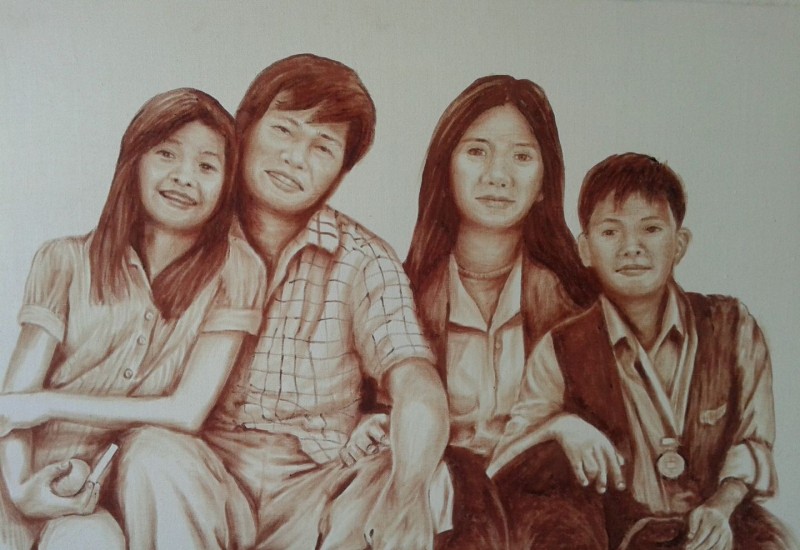
You are known for using your own blood and hair in your art, aside from the pigments from fruits and other objects you find in your surroundings. Did you ever try using traditional materials? Or did you decide early on that this would be your signature style?
There weren’t any painting tools available in my hometown, so I had no idea what they were supposed to be or look like. But since I loved drawing and painting, I experimented with whatever I could use, usually natural or indigenous materials. The walls of our house and our cabinets served as my canvas, and I would use the leftover charcoal from the stove to draw on them.
Whenever my clothes would get stained from fruits, I’d remember the colors they would leave behind. My favorite was duhat because the stain its juices leave behind is impossible to wash off. In my exploration of possible painting materials, I discovered which fruits or flowers would yield white stains, yellow stains, etc. And then when I got wounded, I learned that blood makes for a great red. I was 9 when I started using enamel paint, which my father would bring home from work, along with tin cans and spare plywood boards. These became my canvas, too.
Before, when I was still drawing on the walls of our house, my mother would get angry and whip me. That taught me to look for something else to draw on, and I resorted to our pillowcases and blankets. Of course, she would also get angry about that. But then, someone told her, “Your son is an artist. You should nurture his talent.” That convinced her to be more supportive, to the point where it was like the opposite of how she used to react. She became overprotective. For example, she didn’t want me to get my hands wet after painting or drawing all day. She was also very proud of me. Whenever I’d finish a drawing, she would show it off to everyone in every corner of our town. Even before there was social media, I had my mother promoting me.
It’s nice to know that your parents nurtured and supported your artistry and creativity. You were also a sponsored child of World Vision Philippines. How important is it for children and aspiring artists to have that kind of encouragement and support?
World Vision started sponsoring me when I was in the first grade, and that was such a big help. Aside from the financial aid, every time I would send one of my drawings to my sponsor, I would receive a lot of praise and encouragement. That was such a big boost to me as a young artist. The physical items that they sent helped a lot as well, like the clothes, blankets, and other necessary items.
Would you recommend sponsoring children as a way for ordinary citizens to show their support, especially for up-and-coming or new artists?
Oo. First of all, not only would receiving material help provide a child with their basic needs, but allowing them to receive proper education and guidance can boost their mind and emotions. It will make them feel that their dreams matter, which every child needs.
I learned to dream bigger as an artist due to the praise that my sponsor would give. Seeing someone support my efforts made me more determined to do better. “I’ll study harder because someone appreciates my effort.” It’s like having an angel beside you, and knowing that you’re not alone makes it easier to face struggles. What sponsors do to help children realize a better future is a huge thing, especially for kids whose lives revolve only around their rural hometowns.
What would you say to convince those who aren’t particularly wealthy that becoming a World Vision sponsor is one way of helping the youth and young artists?
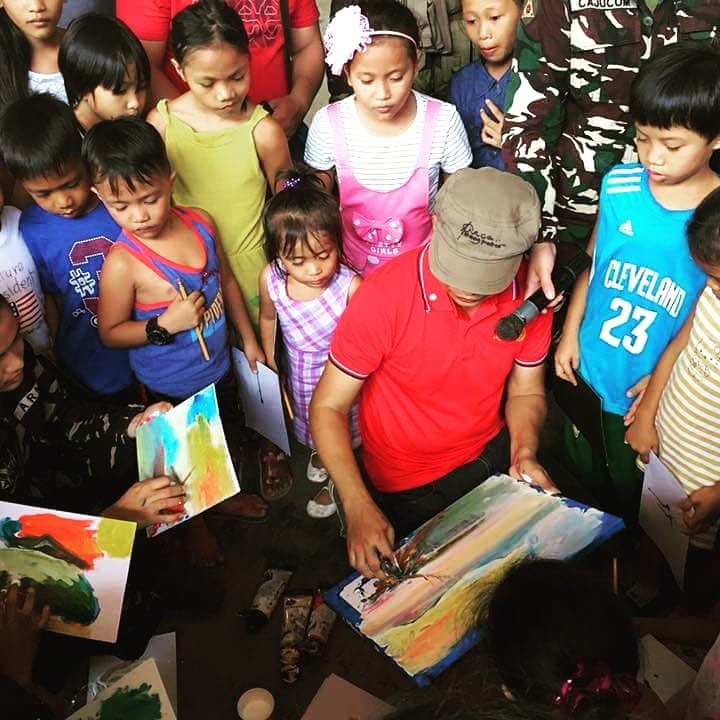
Teaching a child how to read or draw is already an act of generosity. That’s actually how I started my way of giving back. We are God’s tools, and our talents are the means for us to create a better society where we raise the next generation. I’ve always valued what teaching a child can do for a family, how it can turn things around for every member. I’ve seen that happen in remote areas. When I go to these places, I always ask the people, “What do you need?” I immerse myself in the community, setting up a tent where I can live, and talk to the local children. I’d see that some families lack blankets. Others lack cooking utensils…ordinary stuff that most people overlook when giving. Going to far-flung places with the intention to help but without understanding first what the people need is neither enough nor effective. That’s what any kind of sponsor should remember.
Let’s go back to your growth as an artist. What convinced you to focus on using blood painting as your artistic signature?
I first saw oil paints and brushes when I was already in college. Before that, I had thought paintbrushes were made from human hair because my father would bundle and tie up hair strands with tin strips and give them to me to use. I have since switched to using conventional paint brushes, but I still incorporate my own hair strands in my paintings because that’s what I’m used to.
I started learning what my style really is in 1992, when I was a graduating college student. I had been joining art competitions since my second year and was lucky to win every time, so my university decided to present me with a tribute before my graduation. I wanted to create an obra maestra for the event, something I could show to the school. I thought of using my blood and hair to create the painting, but hesitated since I didn’t want people to think I was crazy.
But then I thought that creating a “blood painting” was actually fitting. Artists often contemplate what comes next—what they will leave behind. I was already wondering then, “If I get reincarnated after this life, how would I recognize my works?” Since my paintings literally carry my blood, maybe if I get reincarnated and I get to see them, makakaramdam ako ng lukso ng dugo. So I went ahead and made a blood painting. It was meant only for me to express myself to my alma mater, but it ended up making the news in the country and even abroad.
You also came up with your own term for your art style: Indigenouism.
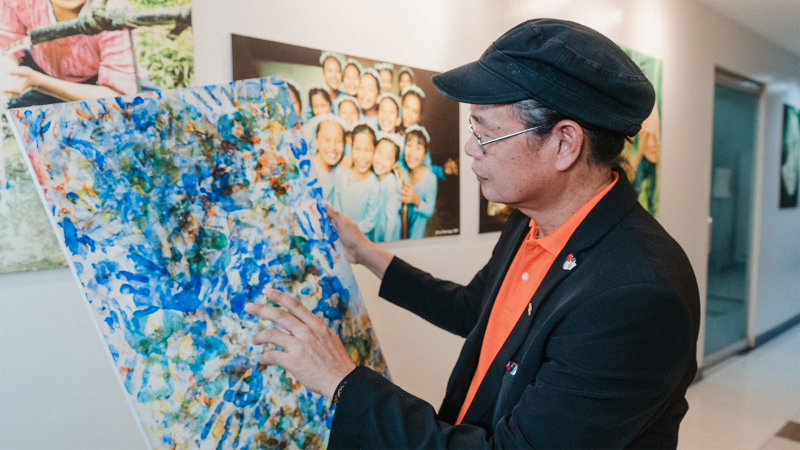
Yes, I did. You have abstract art, Impressionism, Expressionism…I came up with my own classification. Indigenouism means using indigenous materials in your works, which advocate for the environment. If you meet both requirements, then you’re an Indigenouism artist.
My artist friends and I made the term popular. Some of us used rusted metal to make art, some used garlic…Because there were a number of us, it became a movement: the Indigenouism art movement. We held campaigns against global warming using our artworks as our voice.
With Indigenouism rooted in culture, heritage, and the environment, how do you ensure that it continues to grow, specifically among the youth and especially with the emergence of generative AI? Do you see young people who are following these principles and exploring them in their own way?
Well, here in the Philippines, there are artists who use natural materials like coffee as paint. That’s another thing I have been thinking about as well: How to protect artworks that were made using indigenous and non-traditional materials.
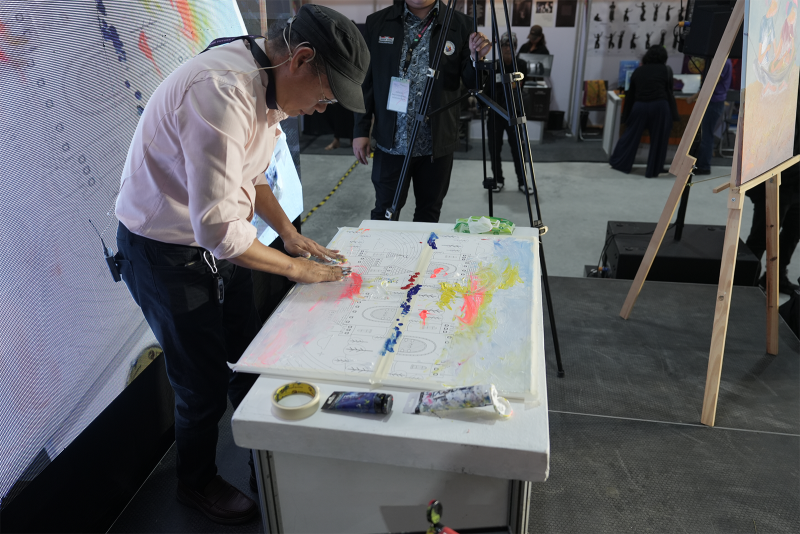
I made and submitted a proposal to my local government unit, the Department of Education, and other agencies where I would create a huge mural and then label its parts according to specific colors—like how a cross-stitch pattern identifies the threads you have to use. That way, different people can participate in filling in the colors of the mural. Fortunately, my proposal was approved by the Department of Education in San Jose City in Nueva Ecija. We had 99 teachers joining in to complete the mural. I laid down the painting, and the participants used their own blood and hair strands to fill in the colors. The piece was completed in 2015.
The piece, which I call “A Thousand and One Lives,” is my first submission to the Guinness World Records. The idea behind it was to have a lot of people contributing to and looking after the painting. Maybe a hundred years from now, some kid would point at it and say, “My grandfather is part of this artwork.” That would make them treasure it more because it has their ancestor’s DNA on it.
How often do you have your blood extracted? And how long does the blood collected from your body last?
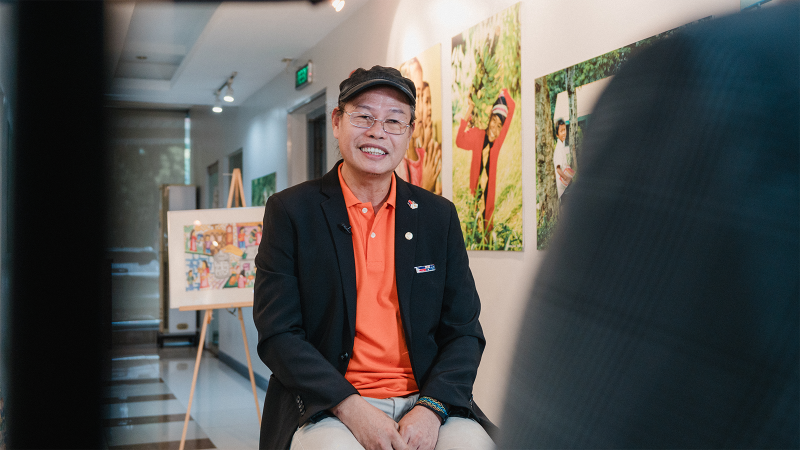
That depends on the size of the painting. If the canvas is 4”x8”, that would need 15 ml of blood. I store the blood in my refrigerator, but I do need to use it up quickly so it won’t go to waste. The pigment also changes the longer the blood is left unused, so often, I finish the painting as fast as I can, foregoing sleep.
Currently, I’m working on a piece that I had started the other year but couldn’t finish due to my other art shows. The canvas is a hundred meters long because I plan to make another submission to Guinness, this time for the longest blood painting in the world. I hope to finish it this year.
Do you have any other projects you'd like to promote? Is your museum open to anyone to visit?
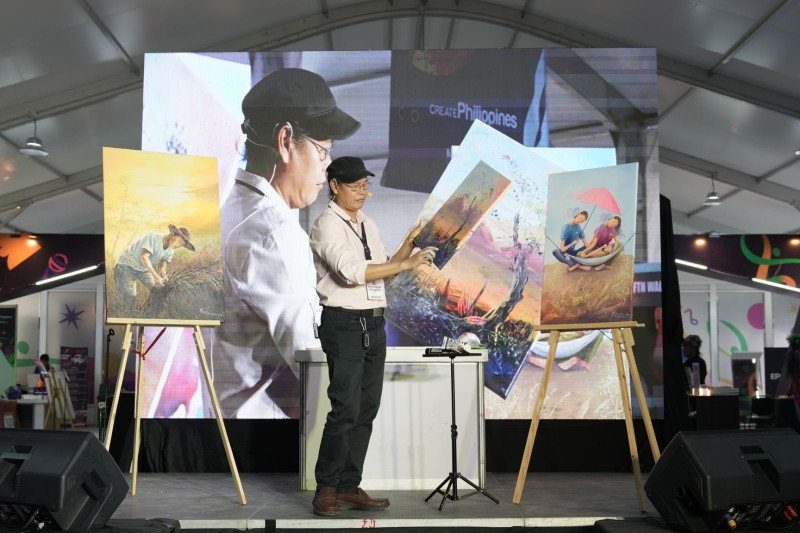
Yes, I invite schools to come visit the museum. I give lectures to visiting students myself. The highlight of these visits is my actual hand-painting process. Sometimes, I’ll have four different canvases to paint on, and then I’ll play music or have someone play music. Then, while the music is playing, I start painting as if I’m dancing. I’ve done that overseas when a foreigner requested that I close my eyes while I paint on a canvas and dance to music. “Dancing fingers, that’s great!”
What advice would you give to young people interested in art who feel that the conventional route to achieving that goal — like undergoing formal training and attending art school — isn't open to them or is beyond their means?
Well, your passion is different from what you do for a living. Creative passion needs to be supported, and so you have to work. You have to have a job. That’s also what I have been doing: I work as an information technology, robotics, and mechatronics consultant because that’s my educational background, and I use my salary to fund my art. Whenever I give a lecture to students, I always give that same advice. “Whatever day job you end up having, keep your creative passion with you because that’s your secret power,” I’d tell them. “Don’t let it die.”
*****
To learn more about Amangpintor and his work, visit his Directory profile, website, and follow him on Instagram. Find out how World Vision Philippines helps change children’s lives and discover how to be a World Vision sponsor through its website.
Want to connect with Amangpintor? Get in touch by filling out the Connect with a Creative form. Want to be part of our creative community and have the chance to be featured on CREATEPhilippines? Sign up and register for our Directory of Creatives here. Join our Viber community, too, and follow us on Instagram, Facebook, X, and LinkedIn to be updated on the creative events that we’re promoting.
Artist’s photos by Camille Dellosa. Artwork and painting session images courtesy of Amangpintor.