
A retro reality check through Bahay Modernismo
The 1950s Filipino suburbia called—and it built you a home in Quezon City
By Santi Buenviaje
August 19, 2025
In the heart of Quezon Memorial Circle, a new landmark invites visitors to step back in time. Bahay Modernismo, which opened in May 2025, is a faithful reconstruction of a mid-century modern Filipino home, offering an intimate glimpse into the post-World War II years when the country embraced bold design and a fresh vision for urban living. From the rubble of war, Quezon City emerged as the nation’s great modernist experiment, with the 1950s and 1960s ushering in homes with clean lines, flat roofs, and generous eaves that reflected a new suburban ideal.
Built to preserve and showcase this transformative period in Philippine architecture and culture, Bahay Modernismo serves as a “living museum” that transports visitors to a time when the Philippines was rebuilding and dreaming of a modern future. Curated by architect and heritage conservationist Gerard Rey Lico, it recreates the Aquino family’s Times Street bungalow using salvaged architectural fragments, transforming the house into both a time capsule and a storytelling device. More than just a home, it reflects the optimism of families who embraced modernity during the post-war years while also highlighting Quezon City’s place in the nation’s architectural heritage.
Yet Bahay Modernismo is more than a nostalgic reconstruction—it responds to a pressing cultural need. With many modernist homes rapidly disappearing to make way for new developments, the project safeguards a vanishing legacy and reminds us that progress is not about erasing the past but building upon it. By preserving the spirit of mid-century modernism, it anchors memory in place and inspires future generations to see innovation not as a break from tradition, but as a continuation of it.

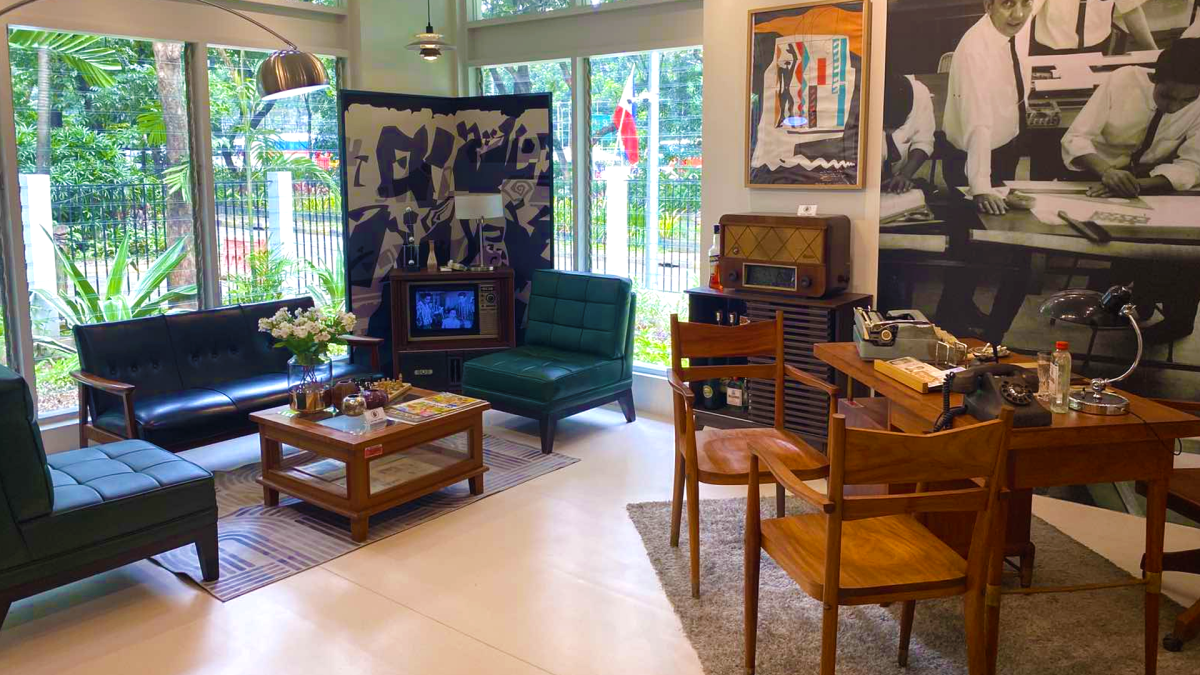
Visitors enter Bahay Modernismo through a living room that recreates the look and feel of a typical ’50s Filipino mid-century modern home. Furnished with original and reproduction pieces from the period—including a retro box television—it reflects the era’s shift toward open-plan layouts, wide jalousie windows, and a seamless integration of indoor and outdoor spaces. This design approach, inspired by American suburban models but adapted for the Philippine climate, became a defining feature of postwar residential architecture in Quezon City.

The dining area continues the story, highlighting the evolution of suburban housing with informational displays on bungalow neighborhood development and the influence of modernist planning principles. Papier-mâché pendant lamps nod to the handcrafted décor of the time, while the layout shows how these dining spaces became templates for Filipino homes today. As visitors make their way to the outdoor patio, the section explores the materials that defined mid-century construction and changed the way homes are built in terms of speed, cost, and design: concrete hollow blocks, Formica, gypsum board, plywood, vinyl, and plastic laminate.
The Space Age section beside the patio captures the era’s boundless fascination with the future. Lighting fixtures, appliances, and décor adopt sleek, futuristic forms—tubes, cylinders, domes, and gentle curves—echoing the silhouettes of rockets and satellites. At a time when space exploration and science fiction stirred the public imagination, even the most ordinary household objects embraced bold designs and dramatic lighting effects, reflecting a world eager to reach for the stars.

This spirit of modernity continues into the kitchen, presented as a “technopolitical space.” During the ’50s, the kitchen was no longer just a place to cook but also a showcase for efficiency, gadgets, and technological progress. Outfitted with modular layouts, integrated appliances, and vintage food packaging, the museum’s display captures the postwar belief that design and technology could transform daily life.

Moving deeper into the home, the first bedroom channels the study of a 1950s Filipino patriarch, complete with a wooden desk, an old radio, a liquor cabinet, and shelves of books and tools. It reflects an era when men were seen as breadwinners and protectors, yet were beginning to take a more active role in family life.

Nearby, a cheerful child’s room brims with toys and bright colors, evoking the Baby Boomer years when play and child-centered design became central to suburban living.

The teenage bedroom hums with pop culture: Movie posters, music memorabilia, and books capture the newfound independence and identity of the Filipino middle-class youth in the ’50s and ’60s.

In contrast, the woman’s bedroom blends elegance with practicality. Dresses hang neatly in the wardrobe, a sewing machine sits ready by the window, and vanity items invite quiet moments of preening. It’s a portrait of women balancing domestic expectations with their growing participation in the workforce.

At its far end, Bahay Modernismo opens to a display of Quezon City’s most iconic landmarks in miniature. The Welcome Rotonda, the Quezon City Memorial Shrine, the Santo Domingo Church, the Araneta Coliseum, the entry to the University of the Philippines Diliman, and the Iglesia ni Cristo Central Temple stand side by side in scale model form, offering visitors a condensed tour of the city’s history and architectural legacy.
More than just a museum, Bahay Modernismo is an invitation to step inside a vision of the future as imagined half a century ago—when architecture, design, and optimism for a better tomorrow came together under one roof. In a world that continues to search for what is new, it stands as a living reminder that the past can still shape the present. By preserving the spirit of mid-century modernism, Bahay Modernismo not only safeguards a chapter of Filipino history but also inspires future generations to pursue innovation that is grounded in heritage.
***
Bahay Modernismo is accessible via the East Avenue entrance of the Quezon Memorial Circle. It is open from 9am to 4pm from Tuesday to Sunday, free of charge.
Got interesting and creative spots to recommend? Get in touch with CREATEPhilippines by emailing us at [email protected]. Join our Viber community, too, and follow us on Instagram, Facebook, X, and LinkedIn to be updated on the creative events that we’re promoting.